+86-15726853660 / +86-18301913645
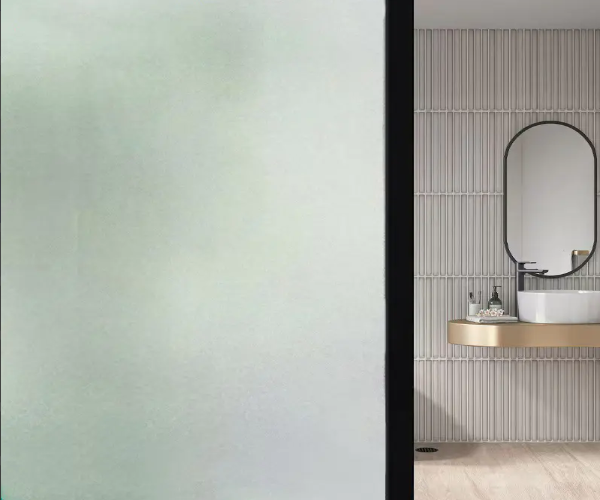
Frosted window film is a common pick when a space needs privacy but shouldn't lose its daylight. It changes how glass looks while keeping a room bright and open. You'll find it on office partitions and bathroom windows alike, where it does both decorative and practical work.
As the range of products grows, buyers often see standard and thickened frosted film listed side by side. Both give a frosted look. They can still differ in material structure, handling, installation, surface feel and the jobs they suit. Those differences affect how the film behaves day to day and how well it fits a given project.
Choosing between them isn't as simple as grabbing the thicker one. The application, the condition of the glass, the installation environment and how often the surface gets used all matter. Knowing these factors helps homeowners, contractors, designers and wholesale buyers decide with more confidence.
Standard frosted window film is a decorative covering that gives glass a translucent look. It changes what people can see through a window or partition, yet daylight still comes in. The surface diffuses the light, so objects behind the glass look less distinct.
That makes it a good fit where privacy matters but a fully opaque covering would feel too heavy. People often consider it for interior doors, office partitions, bathroom windows, meeting rooms and similar glass surfaces.
It also shifts the character of a room. Clear glass links two spaces directly. A frosted surface adds a softer boundary without closing the area off, which helps in modern interiors that depend on glass to stay open.
Styles vary. Some products have a plain, even matte surface. Others come with patterns, gradients or textured effects, so designers can match the glass to the rest of the interior.
Its structure is fairly simple, and that familiarity makes it a regular choice for everyday decoration. If the goal is to add privacy or a consistent frosted look, standard film can cover the needs of many homes and businesses.
Thickened frosted window film is built with a heavier material structure than standard options. The extra material can change how the film feels, handles and sits on the glass. Thickness alone, though, doesn't settle whether a product is good or right for the job.
The obvious difference is feel. A thicker film seems more substantial in the hand and may be less flexible than a standard one. Installers may notice this when positioning the film, working out air pockets and dealing with the edges.
The structure may also change how well the film copes with ordinary handling. Where glass is touched, cleaned or bumped often, buyers may wonder if a thicker option makes sense. Whether it does still depends on the material composition, adhesive design, surface treatment and manufacturing process.
Some projects also use thickened film when the glass should look more defined. It can give a consistent frosted finish across larger decorative surfaces, though the final look depends on the product design and the state of the glass.
A product that is merely thicker is not the same as one designed for a particular application. Heavier film doesn't automatically bring stronger adhesion, a longer life or better scratch resistance. Each of those has to be judged on its own.
So for buyers, the key difference isn't how much material is used. It's how well the whole product is designed for what a space actually needs.
Both films serve the same basic purpose, but a few characteristics can shape the decision.
| Comparison Aspect | Standard Frosted Window Film | Thickened Frosted Window Film |
|---|---|---|
| Material feel | Often lighter and more flexible | Generally feels more substantial |
| Handling | May be easier to position on certain surfaces | May need more careful handling |
| Visual appearance | Comes in simple and decorative finishes | Also comes in simple and decorative finishes |
| Application | Common for general privacy and decoration | Considered for projects with specific material preferences |
| Installation | Can be convenient for routine jobs | May depend more on flexibility and adhesive design |
| Project suitability | Suits many everyday glass surfaces | May suit projects where a heavier film structure is preferred |
| Purchasing considerations | Focus on finish, adhesion and application | Weigh thickness alongside flexibility, adhesion and finish |
These are general tendencies, not fixed rules. Manufacturing methods differ, and two films of different thickness may still behave in much the same way.
All of this explains why choosing a film should involve more than comparing looks or thickness labels.
Privacy and light are two big reasons people choose frosted film. Buyers usually want to cut direct visibility while keeping a room comfortable and bright.
Standard and thickened film can both do this. How much privacy you get depends on the frosted surface, opacity, pattern and lighting conditions. Thickness is just one piece of the structure.
A frosted surface scatters light as it passes through. The view softens and details become harder to recognise. Daylight still enters the room, but what you see through the glass is less clear.
The balance between privacy and light differs from product to product. A light frost keeps things looking open, while a denser one separates spaces more firmly. Buyers should decide on the balance they want before picking a design.
Lighting changes the picture too. In daytime, bright outdoor light can make the interior harder to see from outside. At night, indoor lights can reverse that, and people outside may see more than expected, depending on the product and the surroundings.
For that reason, frosted film shouldn't be treated as a complete privacy fix everywhere. Spaces that need dependable separation may call for extra window coverings or a different glass treatment.
Nor does thickened film necessarily give more privacy. If two products have similar frosted finishes and opacity, their privacy effect is likely to be similar. Compare the actual visual design, not the thickness, as the main indicator.
The setting plays a big part in the choice. A film that works well on a small interior window may not suit a large glass partition or a busy commercial space.
Homes use frosted film in bathrooms, bedrooms, kitchens, entry doors and interior glass partitions. Standard film often handles everyday decorative needs, especially on smooth glass in a simple installation area.
Homeowners who prefer a more substantial feel, or have specific product requirements, may look at thickened options. Even then, consider the window's location, cleaning habits and exposure to moisture.
Glass partitions are common in modern offices. They keep the layout open while separating work areas, meeting rooms and private spaces. Frosted film marks those boundaries without solid walls.
Standard film may do for general office decoration and privacy. Thickened film may come into play when buyers have particular preferences about handling or product structure. Either way, a consistent finish across several panels is important.
Retail stores, reception areas, clinics and service facilities may use frosted film to create privacy around selected spaces. It can also help organise a building visually by separating public and private zones.
The choice may hinge on daily contact, cleaning needs and the design of the glass. Buyers should also check whether the film has to match other decorative elements.
Glass doors need a balance between visibility and privacy. Fully clear glass may not separate enough, and an opaque covering can make a space feel closed.
Frosted film sits in the middle. It can cover the whole surface or just selected sections. Decorative bands and patterns can also make glass doors easier to notice.
For these uses, pay attention to flexibility and adhesive compatibility. A thicker film may need a different installation approach from a lighter one, depending on its design.
Choosing frosted film starts with understanding the project. Look past the product name and review the features that decide whether it fits.
The intended function should lead the choice. Some projects need mainly visual privacy. Others are about decoration, interior coordination or a consistent look across many panels.
If privacy comes first, examine the film's opacity and surface design. If the aim is decorative, pattern, finish and color may deserve more thought.
Not every film suits every glass type. Smooth glass is the usual choice for self-adhesive decorative film, but surface condition can affect installation.
Dust, oil, moisture, scratches and uneven areas can interfere with adhesion. Confirm that the product is made for the intended glass and find out whether special preparation is needed.
Thickness changes how a product feels during installation. A more substantial film may need careful positioning, especially around edges or on larger panels.
Ask for samples if possible. Handling one tells you more about flexibility, texture and overall feel than a description can.
The adhesive is a key part of the product. It affects how the film attaches to glass and how it behaves during installation.
A suitable adhesive should match the surface and conditions of use. Buyers should also know whether the product is meant for permanent use, removable decoration or another purpose.
Window film may meet fingerprints, dust, cleaning products and regular contact. Maintenance needs vary with surface finish and material composition.
Read the cleaning instructions before buying, and don't assume all frosted films tolerate the same cleaning methods.
In commercial projects, several panels may need to look the same. Differences in surface texture, opacity or pattern alignment can affect the overall result.
Wholesale buyers and contractors should ask suppliers about production consistency and quality inspection. This matters most for projects that involve repeat orders.
Installation quality affects the look and lifespan of both types. Even a well-chosen film can end up uneven if the glass isn't prepared properly or the job is rushed.
Standard film can be easier to handle in some routine installations thanks to its lighter structure. Its flexibility can make positioning simpler, particularly on smaller sections of glass. The real experience still depends on the adhesive and film design.
Thickened film may need more attention in handling. Installers should avoid pulling or bending it in ways that could change its shape. Careful alignment matters too, since visible creases or trapped air spoil the finished surface.
Installation usually goes through a few practical stages:
The exact method depends on the product. Some films use pressure-sensitive adhesive, while others need a different approach. Installers should follow the supplier's instructions instead of using one method for everything.
On larger commercial projects, a trial installation can reveal handling issues before work starts across the whole site. It also lets designers and buyers judge the finished look under the real lighting.
For importers, distributors, contractors and project buyers, choosing a supplier means more than comparing prices. A good supplier explains product differences clearly and gives information that supports the buying decision.
China thickened window frosted film suppliers may offer different product structures, finishes, patterns and packaging. Buyers should check that the range fits their target market.
A supplier with a variety of frosted finishes can support projects with different design needs. Buyers may want plain frosted film, patterned options, decorative finishes or products with different material structures.
Customization can also cover product appearance, packaging, roll presentation and other purchasing requirements. Settle these details before confirming an order.
Suppliers should describe their products clearly. Details on film structure, adhesive type, surface finish and recommended uses help buyers know what they're getting.
When comparing standard and thickened products, ask how the two differ in practice. A clear explanation tells you more than a product name does.
Samples let buyers check appearance and handling before a larger order. They can look at surface finish, flexibility, opacity and compatibility with the intended glass.
Distributors can also use samples for product demonstrations and for talking with their own customers.
Consistency matters when film goes into repeated commercial projects. Buyers can ask how suppliers check surface appearance, material condition, adhesive performance and packaging.
A clear inspection process helps prevent misunderstandings during purchasing and delivery.
Choosing a product often raises questions about applications, customization, packaging and shipping. Suppliers should answer clearly and explain any limitations.
Buyers should also confirm order details in writing. Product descriptions, sample approvals, packaging requirements and delivery arrangements should all be agreed before production or shipment.
Not every frosted film is made for the same environment. A supplier should explain the intended uses and any restrictions the manufacturer states.
This matters most for buyers who serve several markets. Residential customers, office contractors and commercial operators may expect different things from privacy, appearance, installation and maintenance.
The difference between standard and thickened frosted window film is therefore better judged by looking at the whole product. Thickness can change material feel and handling, but it doesn't decide privacy, adhesion, durability or installation suitability by itself. Clear product information and a check against the real application help buyers pick a film that fits each glass project.
Contact us

+86-15726853660 / +86-18301913645
No. 99, Jinxiang Road, Hubin New District, Suyu, Suqian City, Jiangsu Province, China

Decorative Film Materials

 English
 Français
 Español
 عربى
 русский