+86-15726853660 / +86-18301913645
Daylight makes a room feel better. It opens up the space, helps with daily tasks, and cuts down on how often the lamps need to be switched on. Big glass windows, though, come with a catch: anyone walking past can see in. That's an awkward feeling in a home, an office, a shop or a clinic.
So the real question is how to keep the light and lose the audience. Frosted window clings are one fairly simple answer. They turn clear glass into a translucent surface. Details become hard to make out, but daylight still gets through.
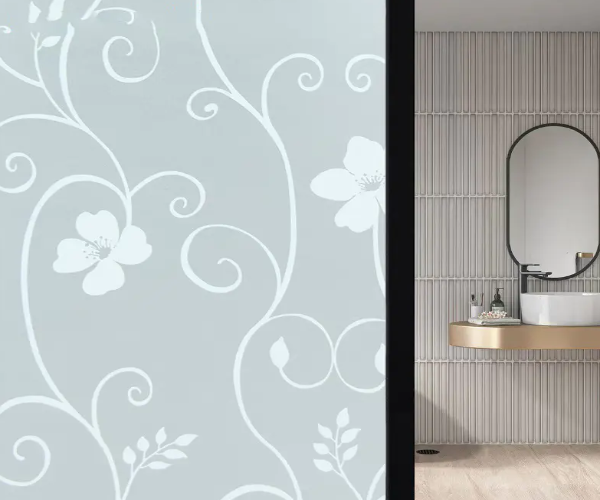
For international wholesalers, distributors and decoration companies, China is a major source of these products. Factories there turn out a wide range of materials, finishes, patterns and formats, so buyers can match a product to the glass and the job in front of them.
There's no curtain rail, no bulky frame and no drilling. A cling goes straight onto suitable glass and changes how the space looks. Because it can come off again, it also suits places where the décor is likely to change.
To see how these products manage privacy and light together, we need to look at their surface, their materials, where they're used, and how they're made.
Privacy and daylight are both part of good interior design, but they tend to pull against each other. Clear glass lets the light in and gives an open view. It also shows the people outside exactly what's going on inside.
The usual fixes are curtains, blinds and solid coverings. They do cut visibility. Close them fully, though, and a good share of the daylight goes too.
That causes real headaches. An office starts leaning on artificial lighting. A small room feels boxed in. A shop loses the visual link between inside and outside.
Frosted window clings take a different route. They don't seal off the glass with an opaque layer. They create a translucent surface that changes the way light travels through the window.
The effect is softer. From outside, a passer-by might catch a vague shape or some movement, but not clear detail. Meanwhile the room stays bright.
That makes them useful in many settings:
Flexible interior design has pushed this trend along. Owners and designers like solutions they can change later without making a permanent mark on the glass.
The privacy-with-light effect comes from what a frosted surface does to incoming light.
Through clear glass, light travels almost undisturbed, so you can still recognise whatever sits behind it. A frosted cling interrupts that. Its fine texture or translucent finish scatters light in many directions.
Instead of following one clean path, the light spreads out over a wider area. Images lose their sharpness as a result.
A quick comparison makes the difference easier to see:
| Glass Surface | Light Transmission | Visual Privacy | Appearance |
|---|---|---|---|
| Clear glass | Direct light passes through | Limited privacy | Transparent |
| Frosted window cling | Diffused light enters | Reduces clear visibility | Soft and translucent |
| Opaque window covering | Blocks most direct visibility | Provides visual separation | Solid and non-transparent |
| Curtains or blinds | Depends on material and opening position | Adjustable privacy | Fabric-based appearance |
Light coming through frosted material is spread more evenly. Harsh contrasts ease off, and the room takes on a calmer mood.
How much light actually gets through depends on the material, the surface finish and the design. Some clings look light and airy. Others cover more heavily.
One caution for buyers: privacy isn't constant. If the inside of a room is much brighter than the outside, for example at night with the lights on, visibility can change. A frosted cling reduces clear viewing. It shouldn't be treated as a guaranteed barrier in every situation.
Where strict privacy is required, the product needs to be checked against the actual use.
Material choice sits at the heart of making a frosted cling. Different materials give different looks, different flexibility and different installation behaviour.
A good one delivers a steady frosted look and keeps performing on glass as intended.
The surface finish matters most. It sets the product's appearance and shapes how light is distributed.
Some clings have a fine, even finish. Others add texture, patterns or varying degrees of translucency. Designers can use these differences to dial the visual separation up or down for a given space.
A few features deserve a closer look.
This decides how much light passes while clear viewing is cut. A lighter frost keeps a room brighter. A denser one separates spaces more strongly.
The right pick depends on the room's lighting and how private it needs to be.
An even surface gives a uniform look across the glass. Uneven texture or visible differences in the material can spoil the overall effect.
On large windows this counts for even more. When several pieces sit side by side, small variations show up quickly.
Clings go onto glass of many shapes and sizes. A flexible material is easier to cut, position and install.
That helps with decorative glass panels, office partitions and any spot where standard window dimensions don't apply.
Frosted finishes range from plain translucent sheets to decorative patterns. Some make a quiet visual barrier. Others become part of the interior design.
Static cling products can usually be taken off without the sticky residue that conventional adhesive-backed films may leave, as long as the product and the glass surface are suitable.
That's handy for temporary decoration, rental properties and spaces where layouts keep changing.
Manufacturers have to weigh all of these together. A privacy product also has to suit the place it's installed and the handling it will get.
These clings go well beyond ordinary home windows. Light diffusion, visual privacy and decorative flexibility let them work on many kinds of glass.
Chinese manufacturers and wholesalers serve buyers with very different needs. Some customers want plain frosted sheets for general decoration. Others want patterned or customized products for commercial projects.
Bathrooms are the classic case: privacy is needed, daylight isn't unwelcome. Clings also turn up on entrance doors, bedroom windows and glass panels between rooms.
In smaller homes, they can divide areas without making the interior feel cramped.
Modern offices love glass partitions for an open layout. Meeting rooms and private work areas, however, usually need a bit more separation.
A cling can be applied to selected sections of glass. Light still moves between rooms, while direct sight lines into private areas are reduced.
Some companies add patterns or brand-related graphics to keep the interior looking consistent.
Shops use glass for displays, entrances and internal dividers. Frosted clings can mark boundaries without making the store feel closed off.
They also show up on shopfronts, around service areas, and near fitting rooms and consultation spaces.
Clinics, dental offices and consultation rooms need both daylight and discretion.
Frosted surfaces on suitable glass partitions and doors cut visibility while keeping the room clean and bright.
The exact product should be chosen to match the facility's privacy requirements.
Hotels have glass in bathrooms, room entrances, decorative partitions and elsewhere. Clings give visual separation and keep a consistent style.
Removable types are useful when the décor gets refreshed.
Put together, these uses show that frosted clings aren't tied to one kind of building. That versatility lets wholesalers sell to many industries and customer groups.
Privacy is the main reason people buy frosted clings, but looks count too.
A plain frosted surface is simple and neutral. It fits offices, bathrooms and any space where the décor should stay low-key.
Patterns open up more choices. Geometric shapes, lines, florals and other motifs can make a plain pane part of the design.
The pattern changes the feel of a room. Horizontal or vertical lines give large glass panels some structure. Geometric designs suit modern commercial interiors. Softer, decorative patterns often sit better in homes.
Partial coverage is another approach. Rather than frosting the whole window, designers apply the material to chosen sections.
This balances openness and privacy. The top of a window can stay clear to keep the outdoor view, while the lower part gets the frosted finish.
Custom printing adds further options. Businesses can ask for logos, graphics or patterns that match their brand.
When choosing a design, buyers should think about:
A good design serves both the practical and the decorative purpose of the glass.
China has a well-established manufacturing and trading network for decorative window films and static cling products. Overseas buyers can find many styles, materials and packaging options through wholesale suppliers.
Picking a supplier takes more than comparing photos and prices, though. Buyers need to understand the product and check that it fits the intended use.
These points can guide the process.
Ask what the product is made of and whether it suits the glass it's meant for. Flexibility, surface consistency and translucency all matter.
It also helps to know whether the product is static cling or uses an adhesive layer. The two install and come off differently.
Frosted clings don't all look alike. Buyers should decide whether the job calls for subtle diffusion, heavier coverage or decorative partial coverage.
Samples are a good way to compare appearance and light transmission before committing to a larger order.
Some wholesale customers are happy with standard frosted designs. Others need custom patterns, printing or packaging.
Talk through design files, production arrangements and sample approval with the supplier before confirming an order.
The state of the glass affects installation. Confirm that the product works on the intended surface, and ask about restrictions linked to texture, coatings or shape.
Clings need proper packaging so they don't get folded, scratched or damaged in transit.
Wholesale buyers should ask how the products are rolled, protected, labeled and prepared for shipping.
For distributors and retailers, steady appearance from one order to the next is a big deal.
Ask about material sourcing, production inspection, order management and how quality complaints are handled.
Here's a practical checklist:
| Purchasing Factor | What Buyers Should Check |
|---|---|
| Material | Product composition and suitability for glass surfaces |
| Surface finish | Frosted appearance, texture and visual consistency |
| Light transmission | Whether the product gives the intended indoor brightness |
| Privacy effect | Whether it reduces visibility as the application requires |
| Customization | Available patterns, printing and product formats |
| Installation | Application method and surface preparation requirements |
| Packaging | Protection against scratches, folding and damage |
| Supplier management | Production control, inspection and order communication |
For wholesalers, working through these points lowers the risk of ending up with products that don't meet customer expectations.
How a cling is made directly shapes how it looks, handles and holds up from batch to batch.
The finished product looks simple. Behind it, manufacturers coordinate material preparation, surface treatment, cutting, inspection and packaging.
It starts with the material. It needs the right flexibility and visual qualities, and differences in quality can show up in the finished surface and in overall consistency.
Surface treatment comes next. The frosted effect has to be spread evenly. If it's patchy, some areas will look different once the cling is on the glass.
Cutting and finishing affect how usable the product is. Edges should be clean and sizes suitable for the intended use. Ragged edges make installation harder, especially when several pieces must fit together.
Cleanliness matters as well. Dust, scratches and other flaws become obvious once the cling is on glass.
Quality inspection can cover several areas:
Packaging matters a lot in wholesale. Big rolls and flat sheets may be handled several times before they reach the end customer. Good protective packaging cuts down on damage along the way.
Manufacturers with clear production procedures and inspection records are better placed to spot quality problems and keep orders consistent.
Many buyers like static cling window products because they come off easily.
Traditional adhesive-backed films stick with a glue layer. Static cling products mostly rely on surface contact instead, so they can usually be removed more easily from suitable smooth glass.
When the product has been installed properly, the process is fairly straightforward.
The glass should be clean and free of dust or particles first. A clean surface lets the material sit evenly against the glass and reduces bubbles and uneven patches.
To remove it, lift an edge and peel the product away carefully. The exact method depends on the instructions and the material.
Removable doesn't mean endlessly reusable, though. Reuse depends on the condition of the material, how clean its surface is, and how it's handled during removal and storage.
A few habits help keep the product in good shape:
Buyers should also tell static cling products apart from adhesive window films. Both can give a frosted look, but they attach and come off in different ways.
That difference matters when buying wholesale for customers who expect easy installation or temporary decoration.
For rental properties, seasonal displays, temporary office partitions and shops that rearrange often, removable clings offer a flexible way to change glass décor without leaving a permanent mark on the surface.
Contact us






+86-15726853660 / +86-18301913645
No. 99, Jinxiang Road, Hubin New District, Suyu, Suqian City, Jiangsu Province, China

Decorative Film Materials

 English
 Français
 Español
 عربى
 русский