+86-15726853660 / +86-18301913645
+86-15726853660 / +86-18301913645
Clear PVC Film Roll appears in many everyday protective and packaging uses. It is often chosen when a transparent barrier is needed without blocking visibility. The material feels simple at first glance, yet its behavior in contact with water and daily wear is more nuanced than it seems. Questions about whether it is truly waterproof and how long it can last come up frequently in practical applications.
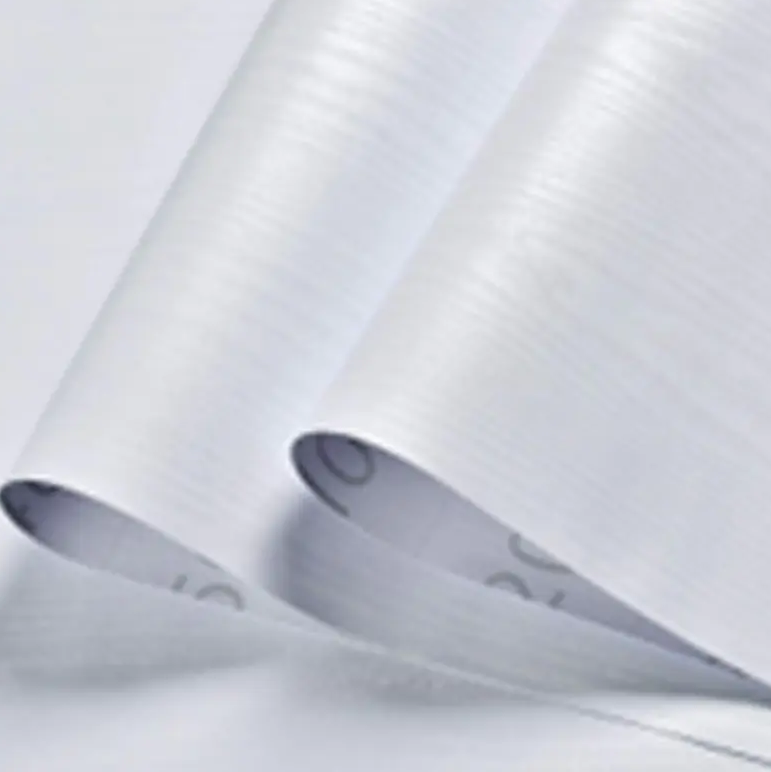
Instead of treating it as a rigid or heavy-duty sheet, it is more accurate to view it as a flexible surface layer designed for protection, separation, and light shielding. Its performance depends not only on the material itself but also on how it is used.
Clear PVC film is extremely popular for protective applications for one key reason. It provides effective protection while still allowing people to see the items underneath, which many protective materials cannot achieve. Most protective materials can shield objects, but few maintain clear visibility at the same time.
It has many practical usage scenarios. For storage, it works as a cover to block dust and keep items clean. In work areas, it serves as a flexible partition to separate different spaces. When used for packaging, it can hold products in place and let customers view the internal contents clearly.
Apart from its protective effects, the material is also very easy to use. It does not require complicated tools or procedures. People can freely cut, reshape and attach it to different surfaces. It fits various objects well instead of requiring the items to match it.
Water resistance is one of the main reasons this material is selected. In normal conditions, clear PVC film does not allow water to pass through its surface easily. Liquid tends to stay on top rather than entering the structure.
This happens because the material forms a continuous layer without visible openings. There is no obvious path for water to move through unless the surface is interrupted.
In real use, this means it can protect surfaces from splashes, light moisture, and short-term exposure. However, its performance changes when the structure is not continuous.
Small gaps, folds, or damaged areas can create weak points. Water does not need to penetrate the material itself in those cases; it only needs a path around it.
A simple breakdown helps show how this behaves in practice:
| Surface condition | Water behavior | Practical result |
|---|---|---|
| Smooth and intact | Water stays on surface | Strong protection |
| Folded or uneven | Water gathers at edges | Partial exposure risk |
| Scratched area | Uneven flow | Reduced barrier effect |
So the material is waterproof in structure, but real-world performance depends on application quality.
Durability in clear PVC film is usually experienced through repeated use rather than force. It can be bent, rolled, and repositioned without immediately breaking.
This flexibility is a key part of its behavior. Instead of resisting movement, it adjusts to it. That reduces the chance of sudden cracking under normal handling.
Over time, changes may appear gradually. The surface might lose some clarity, or the material may feel slightly less elastic after repeated use. These changes do not usually happen suddenly, but develop slowly depending on conditions.
Durability here is not about resisting heavy impact. It is about maintaining usefulness through repeated light stress.
When used as a protective layer, its lifespan often depends more on contact frequency than on material weakness.
Many common environmental and manual factors can affect the service condition of clear PVC film after long-term use.
Sunlight is one of the most obvious influencing factors. If the film is exposed to light for a long time, its transparency and surface condition will slowly change over time.
Temperature fluctuation also has a certain impact on the material. The film will become softer in hot environments and slightly harder in cold conditions. Most of these changes are reversible, but long-term exposure will still cause slow and cumulative damage to the material.
Air humidity is also an important factor. Though PVC film is not easy for water to penetrate, humid air will still gradually affect its edges and layered structures.
In addition, frequent physical contact will also wear down the material. Repeated friction, pressing and folding will form tiny stress areas. These positions are always the first to show aging and performance changes.
| Influence factor | What happens over time | Visible effect |
|---|---|---|
| Light exposure | Gradual surface change | Reduced clarity |
| Repeated folding | Stress buildup | Slight creasing |
| Moist environments | Edge sensitivity | Texture variation |
| Constant contact | Surface wear | Dull appearance |
These effects do not immediately stop the material from working, but they slowly change how it looks and feels.
Clear PVC film is available in different physical forms. Some are lighter and more flexible, while others feel more firm and structured. The difference is not only in handling but also in how they respond to stress.
Water resistance remains present across variations because it is based on surface structure. However, strength and wear resistance can vary depending on form.
A lighter version bends easily and is suitable for temporary use. A more structured version handles repeated contact better and keeps its shape longer under pressure.
This can be understood in a simple comparison:
| Form type | Flexibility | Resistance to wear | Typical use |
|---|---|---|---|
| Light form | High | Lower | Short-term covering |
| Balanced form | Medium | Medium | General protection |
| Firm form | Lower flexibility | Higher resistance | Repeated-use environments |
The choice often depends on whether movement or stability is more important.
Temperature won't alter material properties right away, yet it clearly affects its texture and practical performance.
When the temperature rises, the film turns softer and more pliable. It stretches with less effort and adheres smoothly to surfaces.
In cooler conditions, the material feels firmer and loses some flexibility. It still works as intended, but feels a bit rigid when being handled.
Major changes tend to show after long-term exposure. Prolonged heat or cold will gradually impact its surface finish and elasticity.
All these shifts happen slowly instead of taking place abruptly. The material adapts steadily to the surrounding temperature.
One frequent misunderstanding is that waterproof means completely sealed under all conditions. In reality, waterproof behavior often refers to surface resistance rather than absolute isolation in every situation.
Another assumption is that flexible materials are weak. Flexibility actually helps reduce breakage in many everyday situations. Instead of resisting movement, the material absorbs it.
There is also a belief that transparent materials are fragile. In practice, transparency relates to appearance, not strength. Clear PVC film can remain stable while still allowing visibility.
These misunderstandings often come from comparing it to rigid materials, which behave in a completely different way.
Clear PVC film is often used in situations where protection is needed without blocking light or visibility. It can separate spaces, cover items, or shield surfaces while still allowing quick visual inspection.
In storage environments, it helps reduce exposure to dust. In indoor spaces, it can act as a flexible divider. In packaging, it supports display while offering a protective layer.
Its role is usually supportive rather than structural. It does not replace solid barriers but adds a light protective function where full enclosure is not necessary.
This makes it suitable for changing environments where quick adjustment is important.
How the material is handled often matters more than its initial condition. Gentle use helps maintain clarity and flexibility over time.
Sharp edges and rough surfaces can leave marks that do not fully recover. Repeated folding along the same line may create permanent creases.
Storage conditions also matter. Keeping the film evenly rolled or flat helps avoid distortion. Uneven pressure during storage can affect how it behaves during installation.
Cleaning should remain simple. Harsh friction can reduce clarity, while light wiping helps maintain surface quality.
In many cases, the difference between short and long use comes down to handling habits rather than material properties.
Contact us


+86-15726853660 / +86-18301913645
No. 99, Jinxiang Road, Hubin New District, Suyu, Suqian City, Jiangsu Province, China

Decorative Film Materials

 English
 Français
 Español
 عربى
عربى
 русский